Recently, the Chinese Academy of Agricultural Sciences, Institute of Vegetables and Flowers, Chinese cabbage research team published an article titled "Generating popcorn-like fragrant Chinese cabbage via CRISPR/Cas9-mediated BraBADH2 gene editing" in the renowned horticulture journal "Horticulture Research" (with an impact factor of 9.5 and ranking in Q1). This research, using CRISPR/Cas9 gene editing technology, for the first time created a new variety of Chinese cabbage with "popcorn-like" fragrance from scratch. It confirmed the conserved function of the BADH2 gene in cruciferous vegetables and demonstrated that knocking out this gene does not have a negative impact on agronomic traits. This opens up a new path for future flavor improvement and new variety creation in cruciferous vegetables.
The annual planting area of Chinese cabbage in our country is approximately 23 million hectares. It plays a very important role in ensuring the supply of "food baskets" and stabilizing vegetable prices. At the same time, Chinese cabbage is an important vegetable widely cultivated globally and holds a core position in agricultural production and dietary culture in East Asia. Chinese cabbage can provide vitamins, minerals and dietary fiber for the human body, and is also the core raw material for traditional fermented foods such as pickles. Its flavor and quality directly determine the quality of the products. Aroma, as a key sensory trait, is increasingly receiving attention in breeding. 2-acetyl-1-pyrrolidine (2-AP) is a volatile substance that gives crops their popcorn-like aroma. Beta-alanine aldehyde dehydrogenase 2 (BADH2) is an important negative regulatory factor in this synthesis pathway. The loss-of-function mutation of BADH2 is the direct cause of the aromatic traits in various crops such as rice, sorghum, rape, tomato, and cauliflower. Although the catalytic function of BADH2 is relatively conserved among different species, whether the variation of BADH2 homolog genes in Chinese cabbage can induce the accumulation of 2-AP and thereby create aromatic cabbage germplasm still lacks clear evidence.
This study conducted a BLASTP comparison analysis and identified BraBADH2 on the A06 chromosome of Chinese cabbage. Phylogenetic analysis confirmed that it is highly conserved with other BADH2 homologous genes in the Brassicaceae family. This gene has the highest expression level in young buds. The analysis of resequencing data of Chinese cabbage indicated that natural variations in the exons of BraBADH2 do not lead to functional loss. We utilized the CRISPR/Cas9 gene editing technology to obtain three homozygous frameshift mutant lines without off-target effects. The growth phenotypes of the mutants showed no significant abnormalities, and the leaves accumulated 2-AP and exhibited a "popcorn" aroma. The results of metabolomics and transcriptomics confirmed that the knockout of BraBADH2 triggered a reprogramming of amino acid metabolism, with changes in metabolites such as glutamate and GABA, and a shift in metabolic flow towards 2-AP synthesis, thereby reshaping the flavor of Chinese cabbage. Moreover, GABA, as an important signaling molecule and nutrient component, the changes in its metabolic regulation also provide new materials for studying plant stress responses and human health. This study provides a solid material foundation for breeding new varieties of Chinese cabbage that are "more delicious and more nutritious".
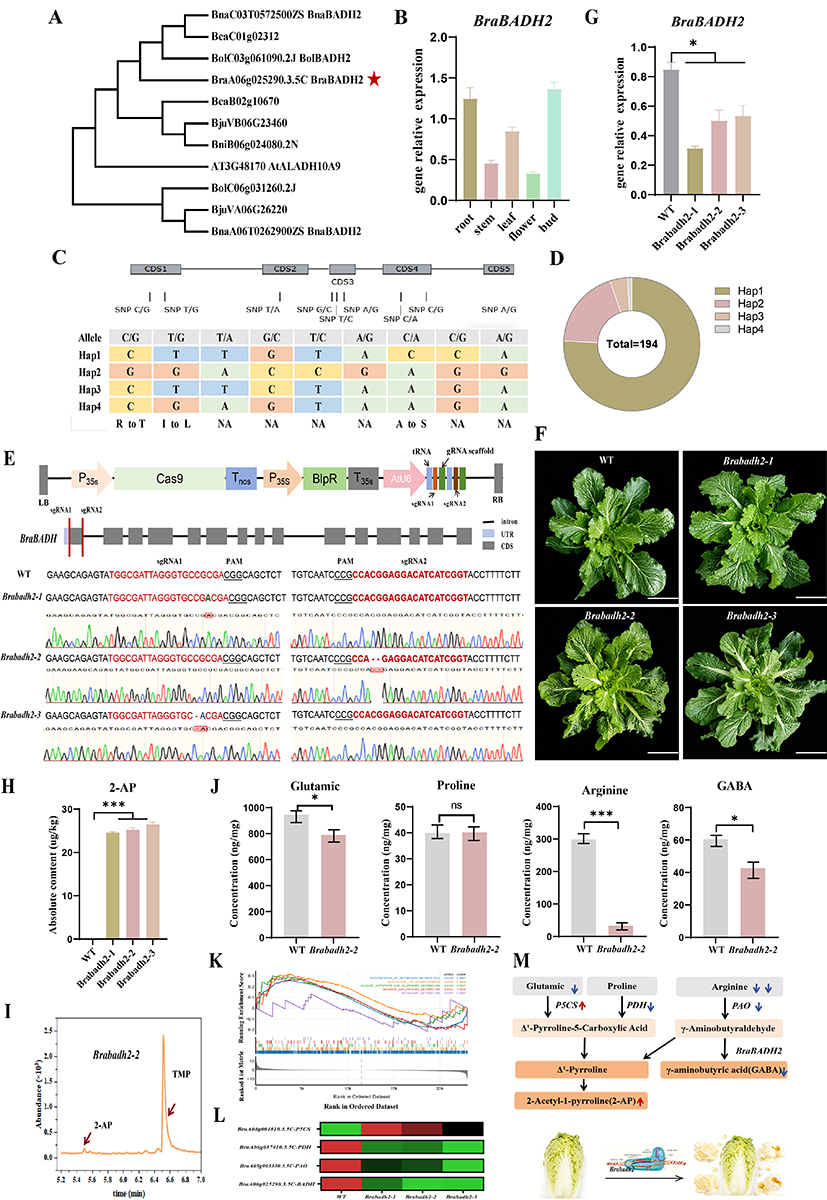
Figure 1: Creating a new variety of Chinese cabbage with popcorn aroma through CRISPR/Cas9 gene editing
The Institute of Vegetables and Flowers of the Chinese Academy of Agricultural Sciences is the first completing unit of this paper. Associate Researcher Li Guoliang and Researchers Zhang Shujiang from the Institute of Vegetables and Flowers, and Zhao Jianjun from Hebei Agricultural University are the co-corresponding authors. Assistant Researcher Wei Yunxiao from the Institute of Biology of the Chinese Academy of Agricultural Sciences, Master's student Zeng Xiaojing and Xu Lingyan from the Institute of Vegetables and Flowers are the co-first authors. This research was funded by projects such as the Project of High-quality Varieties in Shandong Province, the Agricultural Science and Technology Innovation Project of Ningxia Hui Autonomous Region, the National Major Vegetable Industry Technology System, and the Innovation Project of the Chinese Academy of Agricultural Sciences.
Original link: https://academic.oup.com/hr/advance-article/doi/10.1093/hr/uhag437/8917284

 Chinese